
The future of the line: Insights from the inaugural U.S. Culinary Open
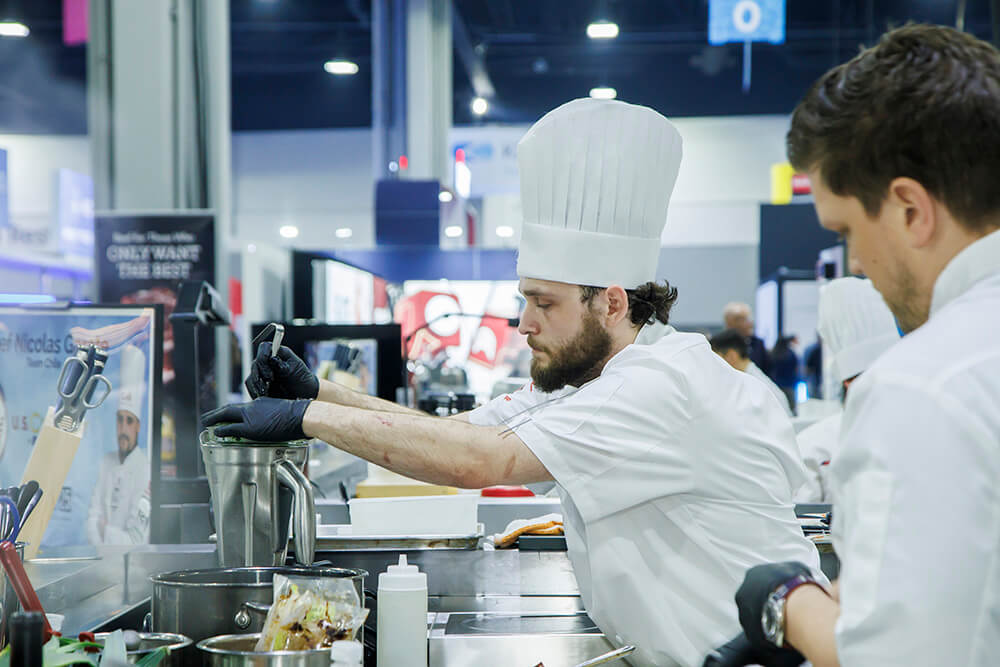
The inaugural U.S. Culinary Open at The NAFEM Show captured the reality of today’s global foodservice industry – bridging Michelin-star precision, the academic rigor of the Culinary Institute of America (CIA) and the massive rise of culinary power in Latin America.
Far more than a competition, this event demonstrates where the professional kitchen is heading. The winners’ panel revealed the operational strategies that secured their victory and their collective vision for the next decade of hospitality. For operators, dealers and consultants, their insights offer a roadmap for the kitchen of the future.
Mentorship and solving for high turnover
A central theme of the discussion was the critical importance of the “commis” (apprentice) role, specifically within the 18–25 age bracket. The champions emphasized that nurturing young talent isn’t just a management task; it’s a survival strategy for an industry navigating operational friction and high turnover.
The winning chefs used rigorous, character-driven criteria to select their partners, highlighting what operators must look for when building teams:
- Absolute trust in high-stakes environments: Chef Cody from Gunshow highlighted the rarity of professional trust, noting that his commis, Ryan, is one of only two people with keys to his restaurant. In an industry where reliability is the ultimate currency, this bond is essential.
- The discipline of the “right way”: Chef Lance Tahara (CIA) spoke to the technical discipline required at the highest levels. His commis, Sean, was the ultimate accountability partner, refusing to let his mentor cut corners during practice to ensure every plate met their exacting standards.
- Leadership under pressure: The Chilean team’s commis, Margarita, was selected because she had already served as its chef manager at the Bocuse d’Or. Her ability to organize and lead under pressure was ultimately more valuable than raw cooking skill alone.
As Chef Freddy Money movingly noted, “We become the educators without knowing.” Teaching the next generation forces veterans to re-examine their own foundations, ensuring the craft evolves efficiently.
Synergy between talent and technology
For food equipment dealers and consultants, the panel offered ultimate validation: High-end equipment serves as the “bones of the building.”
When equipment is reliable, the margin for error shrinks. It allows the chef to stop troubleshooting mechanical failures and focus entirely on staging the perfect plate. The U.S. Culinary Open moderator, Chef Nick Barrington, CEC, ACE, identified a definitive formula for success: top-tier ingredients + expert chefs + cutting-edge equipment.
This synergy enables what Chef Fred calls “whimsy”: the ability to modernize classic techniques with contemporary, tech-forward flair.
However, the panel was quick to humanize the high-tech environment. Chef Lance and Sean noted that while they rely heavily on advanced ovens, they were equally “excited about the awesome lids” and storage solutions. For consultants and dealers, it’s a powerful reminder: the combination of cutting-edge technology and simple, reliable solutions is what creates a truly fluid kitchen.
Kitchen design and trends for the decade ahead
The chefs also provided their perspectives on the evolution of the industry.
- From aesthetics to the “why”: The panel predicts a shift away from visual-heavy molecular gastronomy. The future is ingredient-driven and flavor-first. As Chef Fred explained, the trend is moving toward the storytelling behind the plate and the origin of the ingredients, requiring equipment and supplies (E&S) that preserve pure flavors and integrity.
- The kitchen counter experience: Traditional service barriers are falling. The chefs anticipate a rise in restaurants operating as kitchen counters, with direct guest-to-chef interaction. For consultants, this means specifying quieter, more aesthetic E&S suitable for display cooking and front-of-house operations.
- Global integration: The Chilean team pointed to a growing emphasis – within Latin America and beyond – on respect and education in kitchens, replacing outdated, harsh management styles with a culture of professional pride.
Advice for future competitors (and operators)
For those looking to enter the arena at the 2027 U.S. Culinary Open (or simply to survive a Saturday night rush), the champions offered these operational “quick hits”:
- Reverse-engineer the clock. Don’t just practice recipes, practice time. Plan your logistics for maximum flavor depth without rushing execution.
- Ensure night-before fluidity. Success is determined by your “mise en place.” Everything must be staged so execution is seamless.
- Remain a student. Regardless of your rank, stay humble and open to new techniques, especially those you learn from your peers and team.
The inaugural U.S. Culinary Open demonstrates what’s possible when elite talent is paired with state-of-the-art foodservice technology. The NAFEM Show remains the premier platform for witnessing this essential synergy between chef and machine.